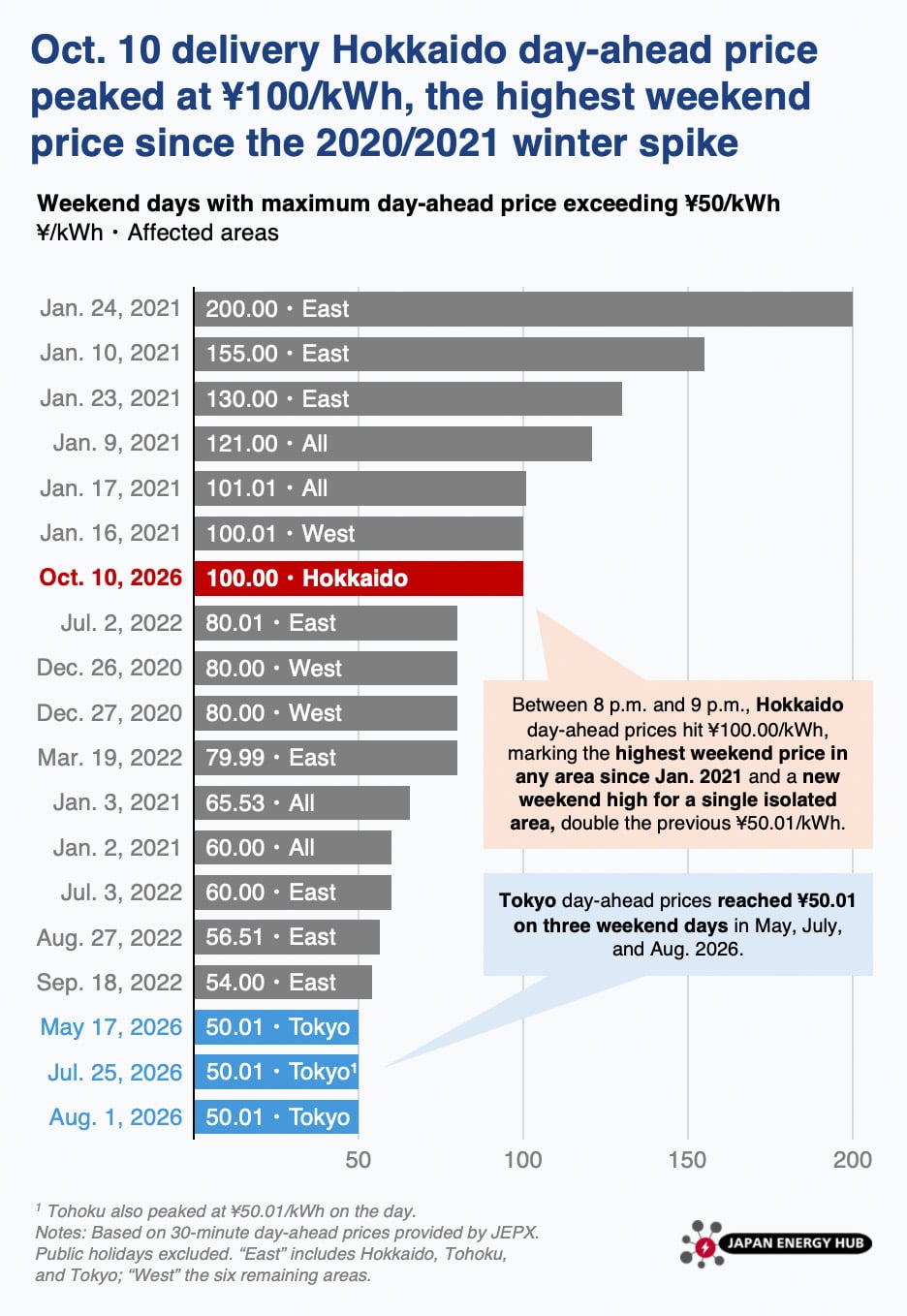
Hokkaido day-ahead prices stayed at or above ¥50/kWh for 14 consecutive half-hour slots from 4 p.m. to 11 p.m. on Saturday, October 10, 2026. Between 8 p.m. and 9 p.m., they reached ¥100.00, marking the highest weekend price in any area since January 2021 and double the previous weekend high for a single area split off from the rest of the grid. Interconnector constraints, thermal power plant outages, and low wind generation likely contributed to the spike.
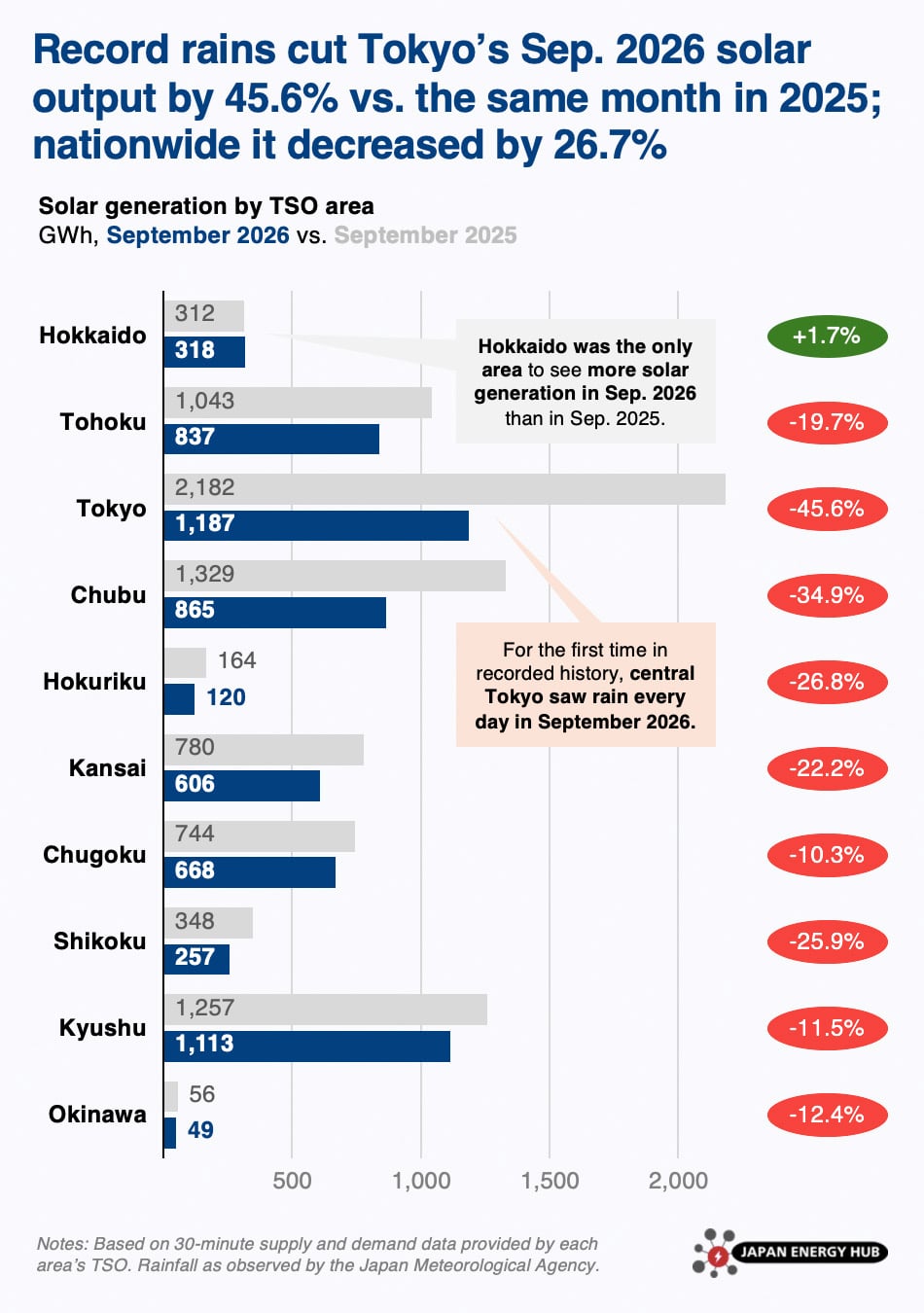
Unusually rainy weather cut solar generation in Japan by 26.7% year on year in September 2026. With central Tokyo seeing rain on every day of the month for the first time in recorded history, the wider Tokyo TSO area saw, at 45.6%, the largest drop nationwide. Hokkaido was the only area to see an increase compared with September 2025, albeit a small one.
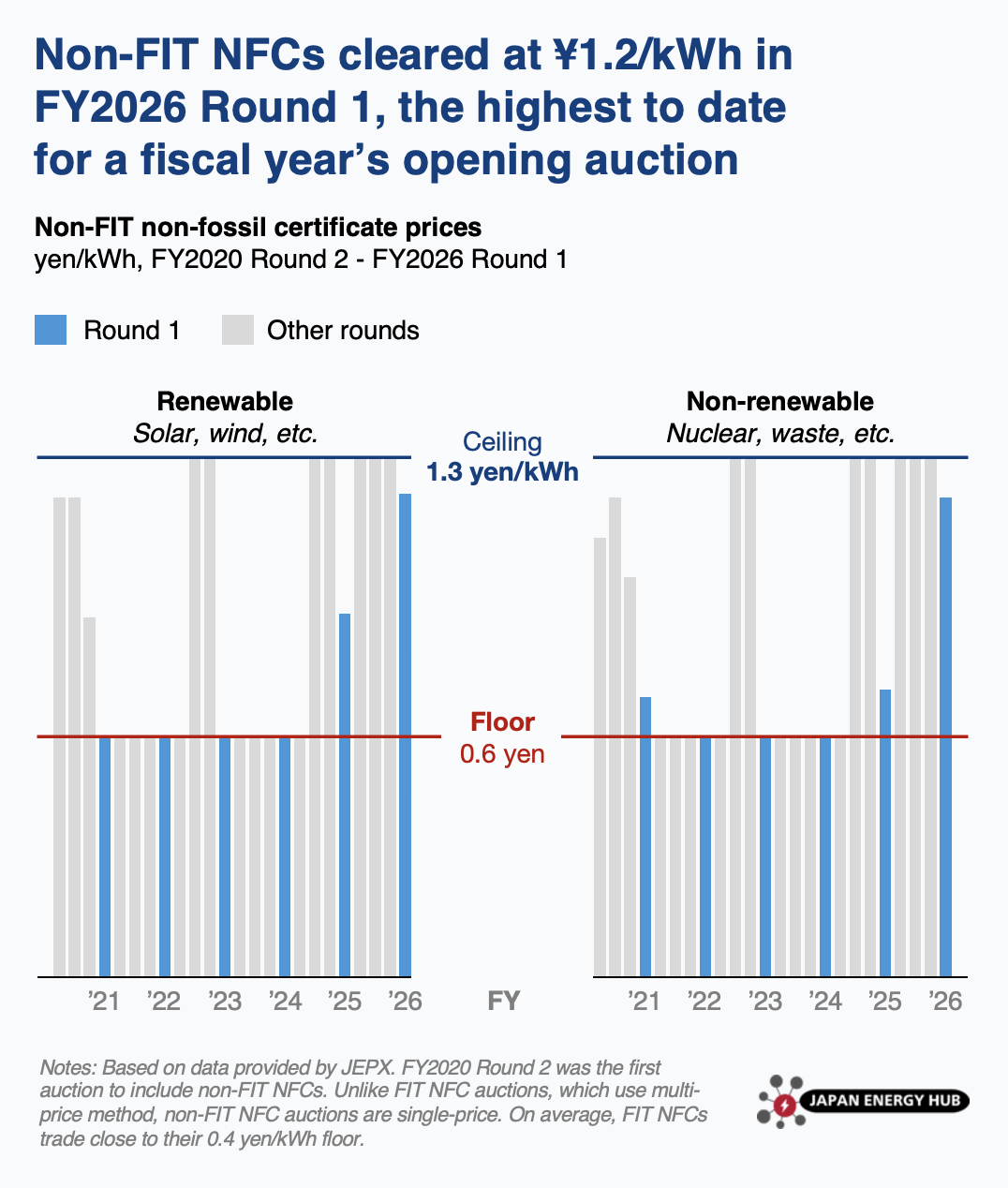
The price of non-FIT NFCs in a fiscal year’s first-round auction neared the ¥1.3/kWh ceiling for the first time. While non-FIT renewable NFCs traded at ¥1.21/kWh in FY2026’s first auction, non-FIT non-renewable NFCs cleared at ¥1.20/kWh. Buy bids reached 12.26TWh for non-FIT renewable NFCs, more than six times the 1.98TWh offered. For non-FIT non-renewable NFCs, the oversubscription was even more pronounced with the 11.15TWh worth of bids exceeding more than 50 times the 200GWh available.
Start typing and press enter to search
Enehub Pro - Inquiry / Quote Request
Fill out the form below to inquire about an Enehub Pro subscription. If you would like to receive a quote, please let us know your planned number of users and any add-ons you are interested in.
We typically respond within one business day.
Enter your billing information below to receive payment instructions and proceed with buying the CPPAs in 2025: Market Overview, Trends, and Opportunities report.
Submit the form below to receive a sample issue of The Japan Power Industry Executive.