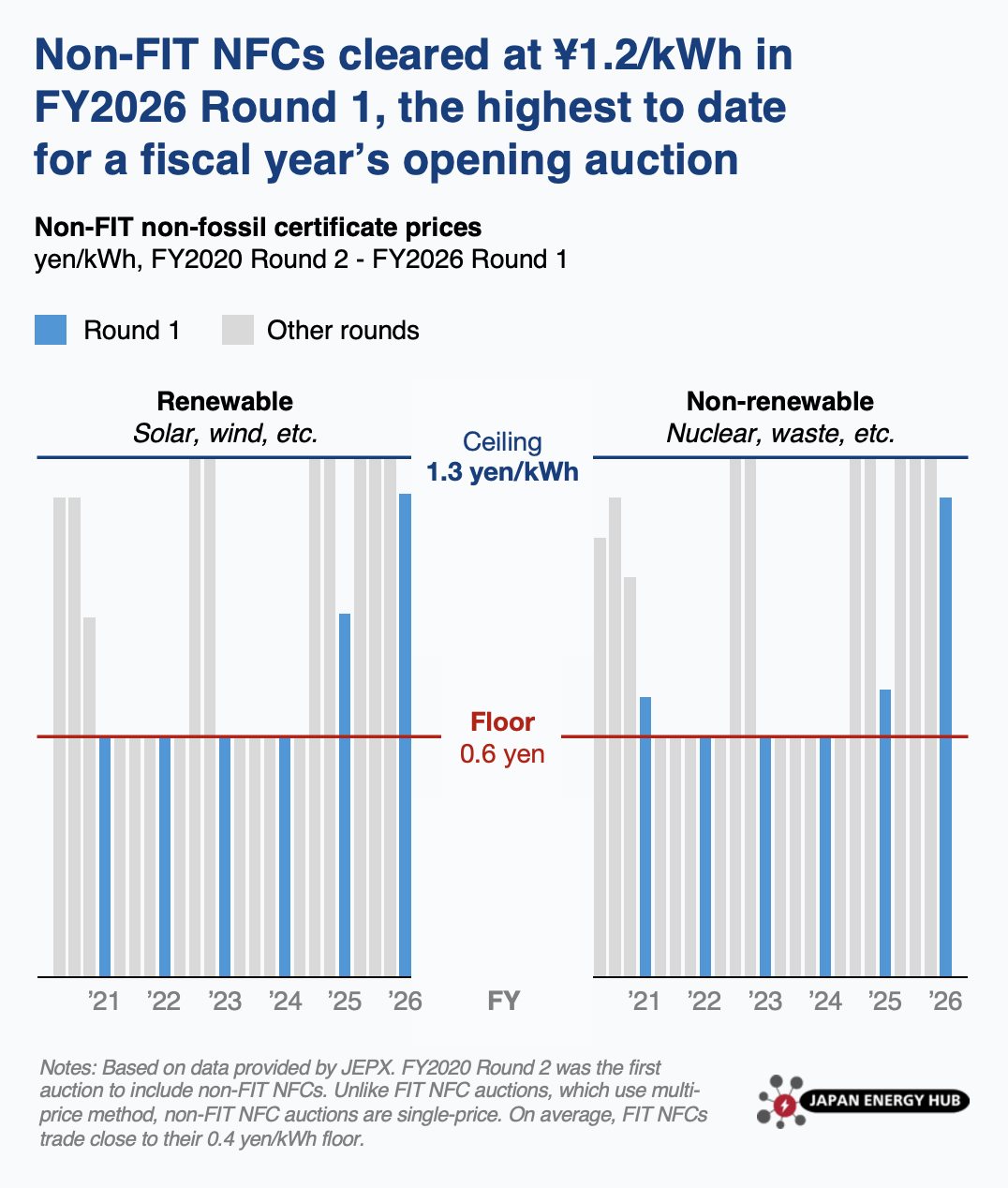
The price of non-FIT NFCs in a fiscal year’s first-round auction neared the ¥1.3/kWh ceiling for the first time. While non-FIT renewable NFCs traded at ¥1.21/kWh in FY2026’s first auction, non-FIT non-renewable NFCs cleared at ¥1.20/kWh. Buy bids reached 12.26TWh for non-FIT renewable NFCs, more than six times the 1.98TWh offered. For non-FIT non-renewable NFCs, the oversubscription was even more pronounced with the 11.15TWh worth of bids exceeding more than 50 times the 200GWh available.
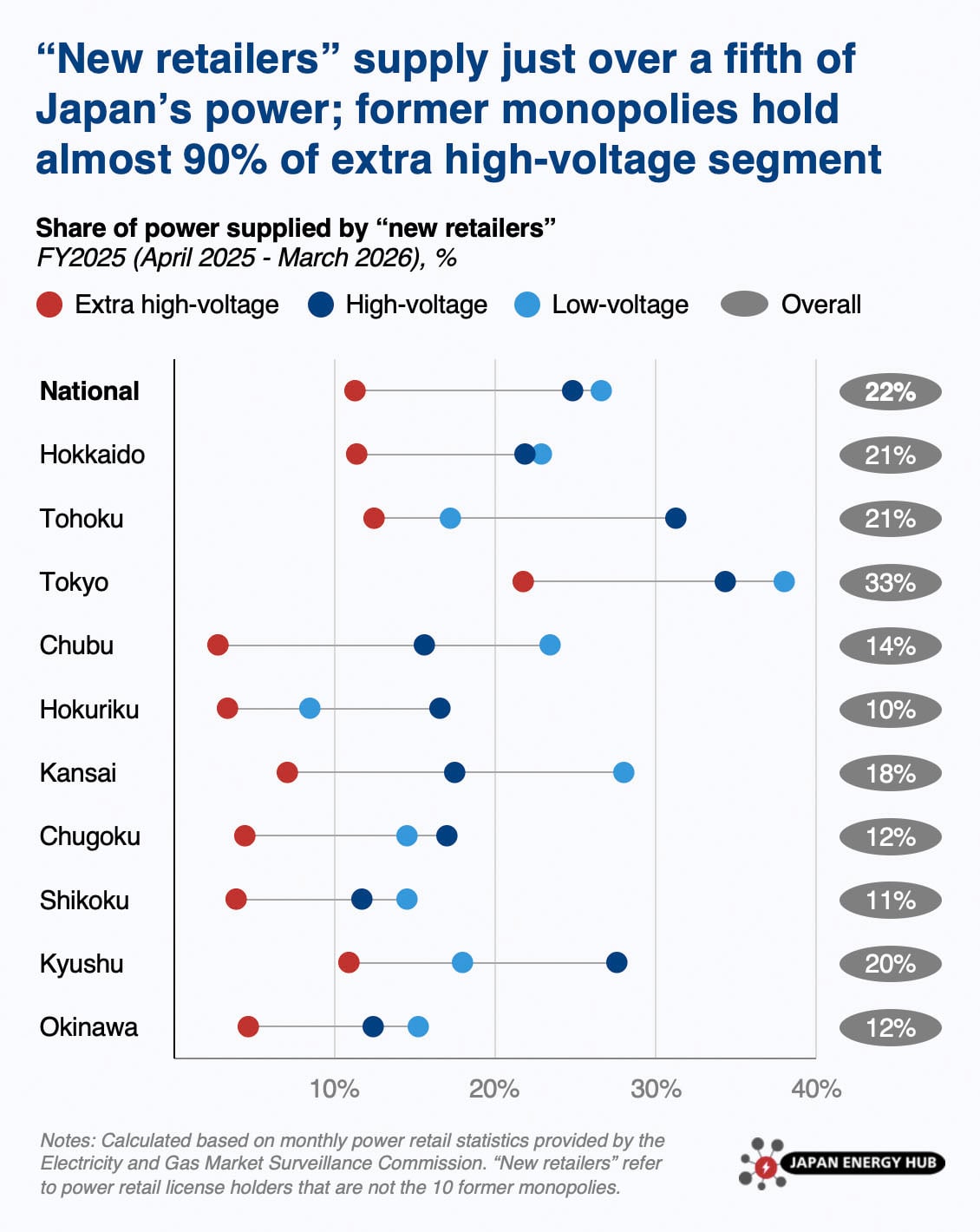
FY2025 marked the tenth year since Japan completed the liberalization of its power retail market with the opening of the low-voltage segment to suppliers other than the incumbent utilities. During the year, “new retailers” accounted for about 22% of total supply by volume, ranging from 10% in the Hokuriku TSO area to 33% in Tokyo. In the extra high-voltage segment, which opened to competition 16 years earlier in 2000, the national share was just 11%, ranging from approximately 3% in Chubu and Hokuriku to 22% in Tokyo.
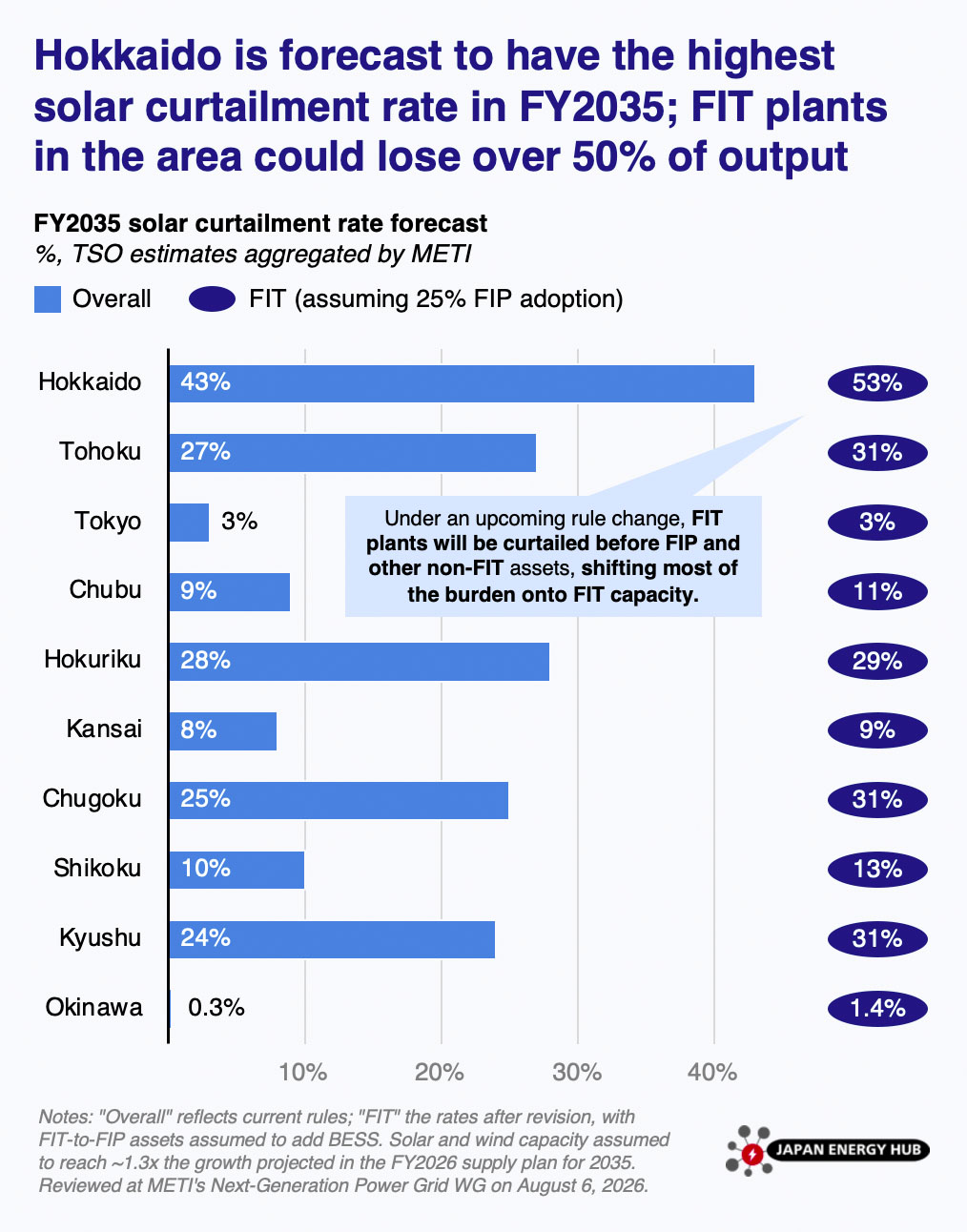
Based on TSOs’ latest forecasts, FY2035 solar curtailment rates are expected to be highest in Hokkaido, Hokuriku, and Tohoku. FIT plants will be affected disproportionately due to an upcoming rule change that curtails them before FIP and other non-FIT assets. According to Hokkaido’s grid operator, more than 50% of the area’s potential FIT solar output during the year would be curtailed in the scenario reviewed by METI.
Start typing and press enter to search
Enehub Pro - Inquiry / Quote Request
Fill out the form below to inquire about an Enehub Pro subscription. If you would like to receive a quote, please let us know your planned number of users and any add-ons you are interested in.
We typically respond within one business day.
Enter your billing information below to receive payment instructions and proceed with buying the CPPAs in 2025: Market Overview, Trends, and Opportunities report.
Submit the form below to receive a sample issue of The Japan Power Industry Executive.