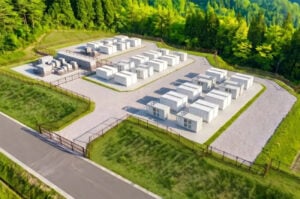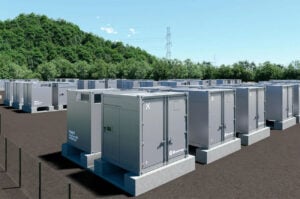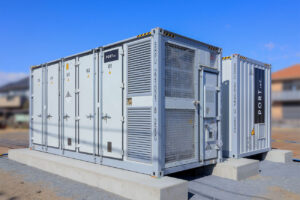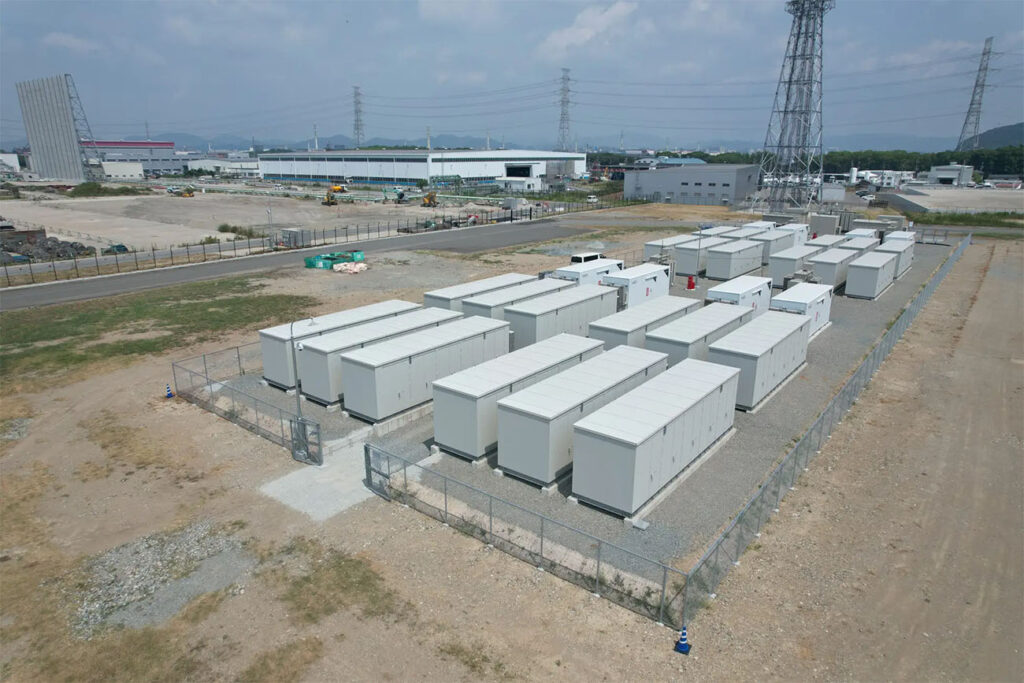
Renova expects its grid-scale battery storage business to contribute 12-14 billion yen in EBITDA in FY2030, including 9-10 billion yen from a disclosed 527MW/1.6GWh pipeline, according to its FY2025 annual report released on May 14, 2026. The disclosed nine-project portfolio is expected to generate 13.5-14.5 billion yen in revenue in the same year.
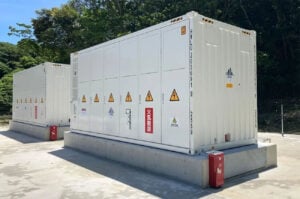
Two projects, including the wholly-owned 2MW/6.5MWh Yasugi Power Storage Station in Shimane and the Idemitsu Kosan-led 15MW/48MWh Himeji Power Storage Station in Hyogo, in which Renova holds a 22% stake, are already operational.
Another five projects are under construction or have executed an engineering, procurement, and construction (EPC) contract. They include three assets backed by long-term decarbonization auction contracts, the 30MW Ishikari Power Storage Station in Hokkaido that will operate under a tolling agreement with Tokyo Gas, and the merchant 90MW Kikugawa Nishimura Power Storage Station in Shizuoka. Renova is expected to hold a 75%-87% stake in each post-COD.
The remaining two projects, for which the company has not disclosed locations, include a 100MW one that has already secured land and grid connection and a 75MW one that is in an earlier stage of development. Renova aims to sign EPC contracts for both in FY2026 and begin commercial operation in FY2029 on a merchant basis.
Accounting for Renova’s economic interest (assuming an 80% stake in the two FY2029 COD projects for which expected ownership was not disclosed), the company’s projections imply revenue of about 32-34 million yen/MW annually based on the disclosed 527MW gross capacity, including a mix of LTDA, tolled, and merchant projects. Assuming the average duration across the portfolio, the figures are equivalent to approximately 10-11 million yen/MWh per year.
Positioning grid-scale battery storage as the key driver of its mid-term growth, Renova expects the segment to account for about 20% of its projected 59-67 billion yen EBITDA in FY2030.