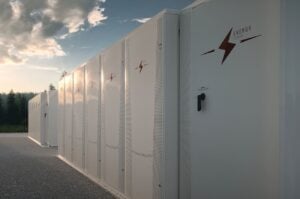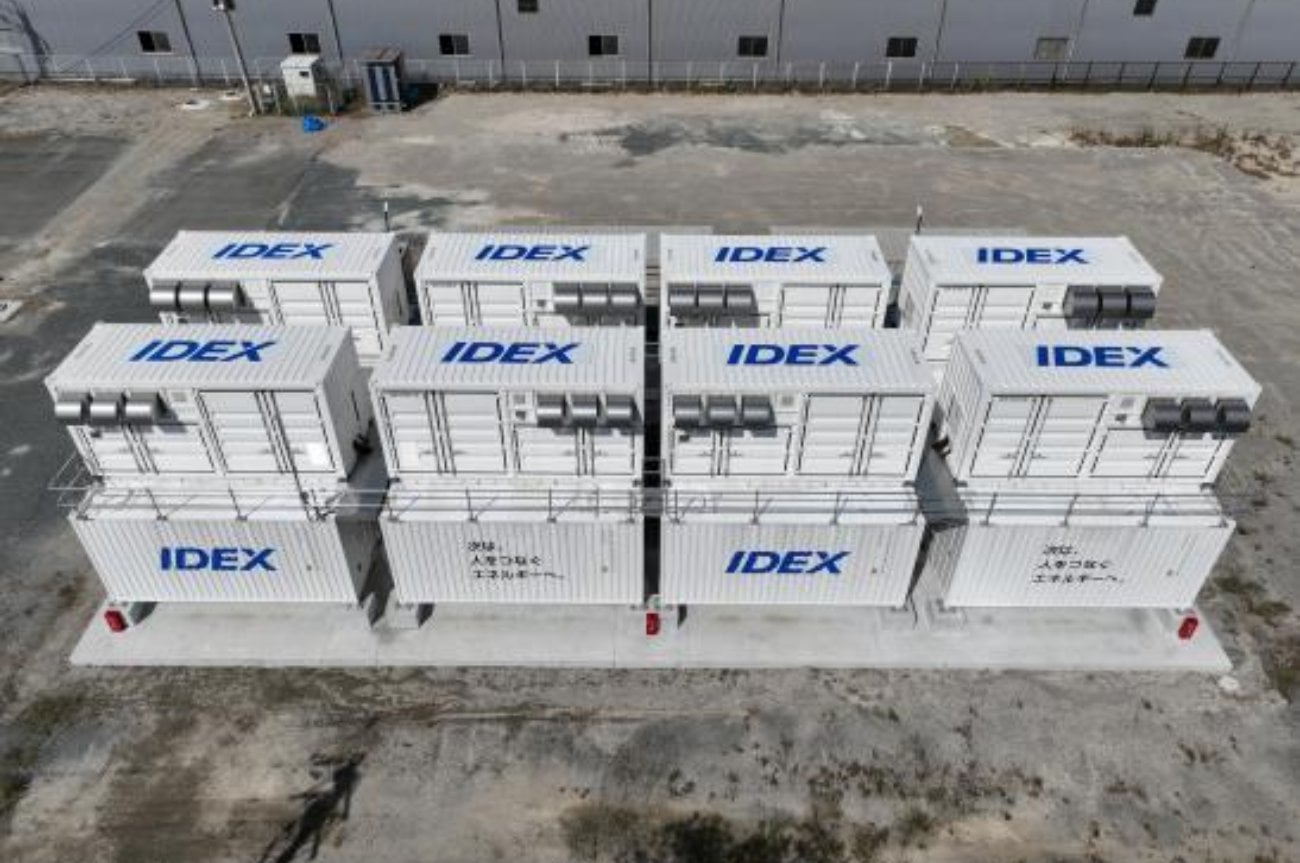
Shin-Idemitsu completed construction of its first grid-scale battery storage project, the 1.99MW/8MWh Nagasu Power Storage Station in Nagasu Town, Kumamoto Prefecture, and plans to begin commercial operation of the asset on November 1, 2026, the company announced on October 28, 2026.
According to the statement, the facility uses redox flow batteries supplied by Sumitomo Electric and an energy management system (EMS) from Fuji-IT. Shin-Idemitsu Facilities handled construction and will be in charge of maintenance. J-POWER will aggregate the asset, participating with it in the wholesale, capacity, and balancing markets.
Data from the Sustainable Open Innovation Initiative (SII), which administers METI’s grid-scale battery storage subsidy, shows the project was awarded approximately 322.2 million yen in the scheme’s FY2024 round.
Sumitomo Electric previously supplied redox flow batteries to three 1MW/8MWh Kashiwazaki IR Energy facilities in Niigata Prefecture. Its technology has also been selected for RYODEN and JPN ENERGY Integrated System’s 2MW Kurayoshi Power Storage Station in Tottori Prefecture, RS Technologies’ 2MW/12MWh project in Fukushima Prefecture, and Miki Kogyo’s 2MW/8MWh Aso Power Storage Station in Hyogo Prefecture.
Nagasu Power Storage Station will join a limited number of operational grid-scale battery storage projects in Japan using technologies other than lithium-ion. Their number is likely to grow in the coming years, with the FY2025 long-term decarbonization auction (LTDA) having introduced a non-lithium-ion category, under which 700MW was awarded.