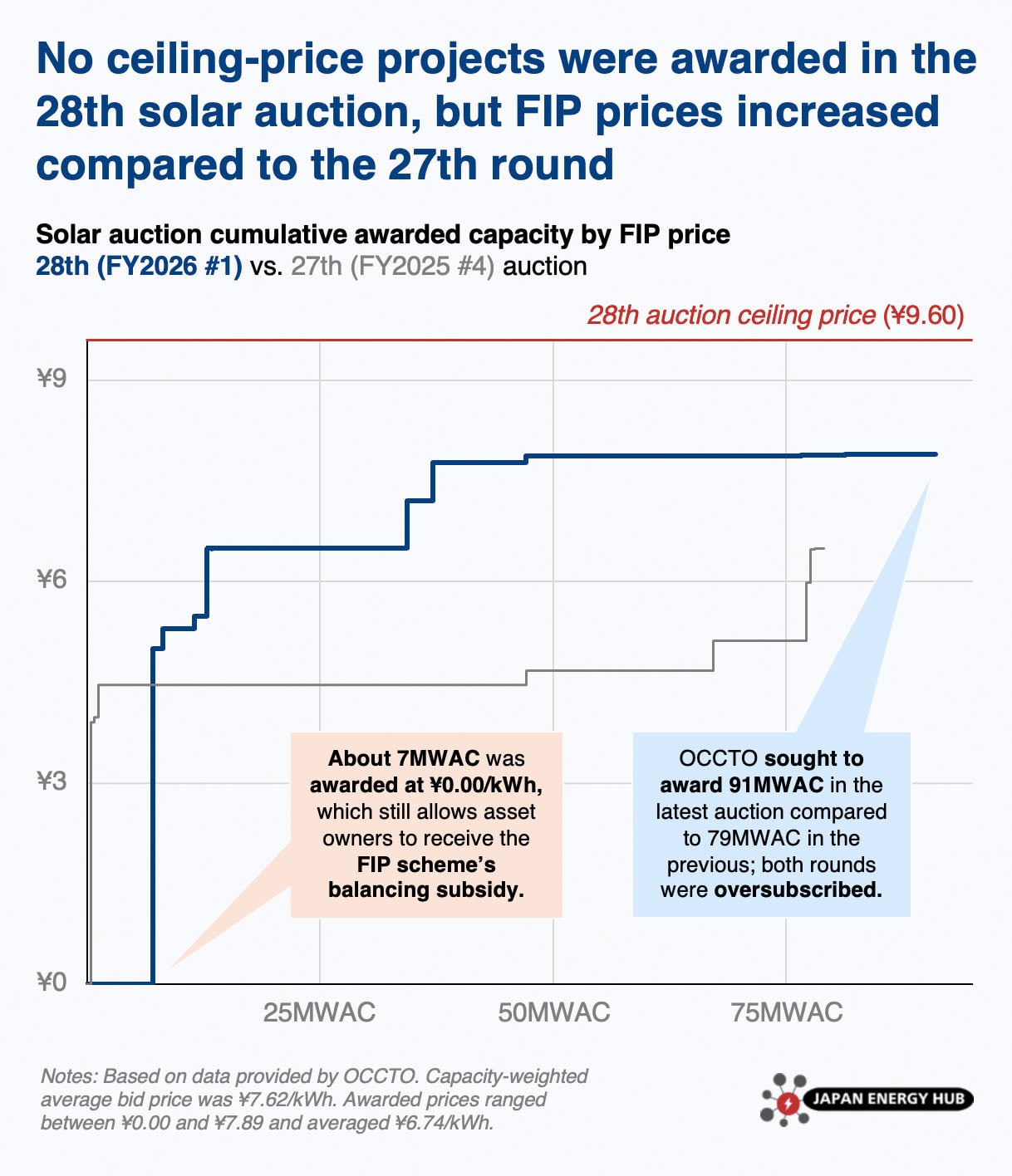
Bids awarded in FY2026’s first solar auction ranged from ¥0.00/kWh, offered by developers to secure the FIP scheme’s balancing subsidy that is paid regardless of the premium, to ¥7.89/kWh. Although no projects were awarded at the ¥9.60/kWh ceiling price, awarded FIP prices were generally higher than in the previous round.
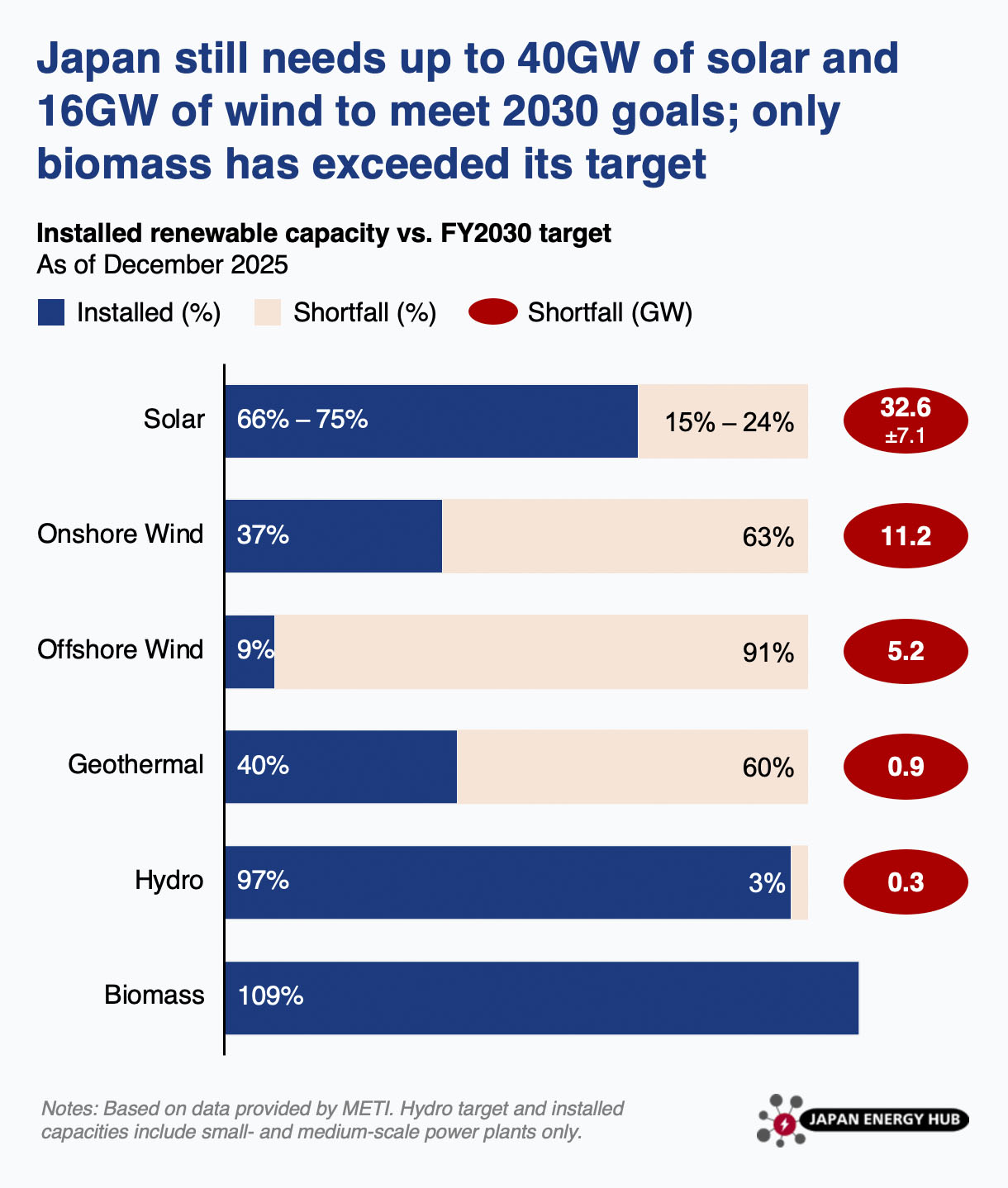
As of the end of 2025, Japan had installed 78GW of solar capacity, leaving it 25.5GW-39.6GW short of its 2030 target. With only an additional 2.6GW certified under FIT/FIP but not yet commissioned, and government support gradually being scaled back, achieving the target will be challenging and will depend heavily on developers’ ability to secure PPAs and bring projects online at a much faster pace. While only 37% of the country’s 17.9GW onshore wind target had been commissioned as of the end of 2025, including FIT/FIP-certified projects that had yet to be built raises the figure to about 90%.
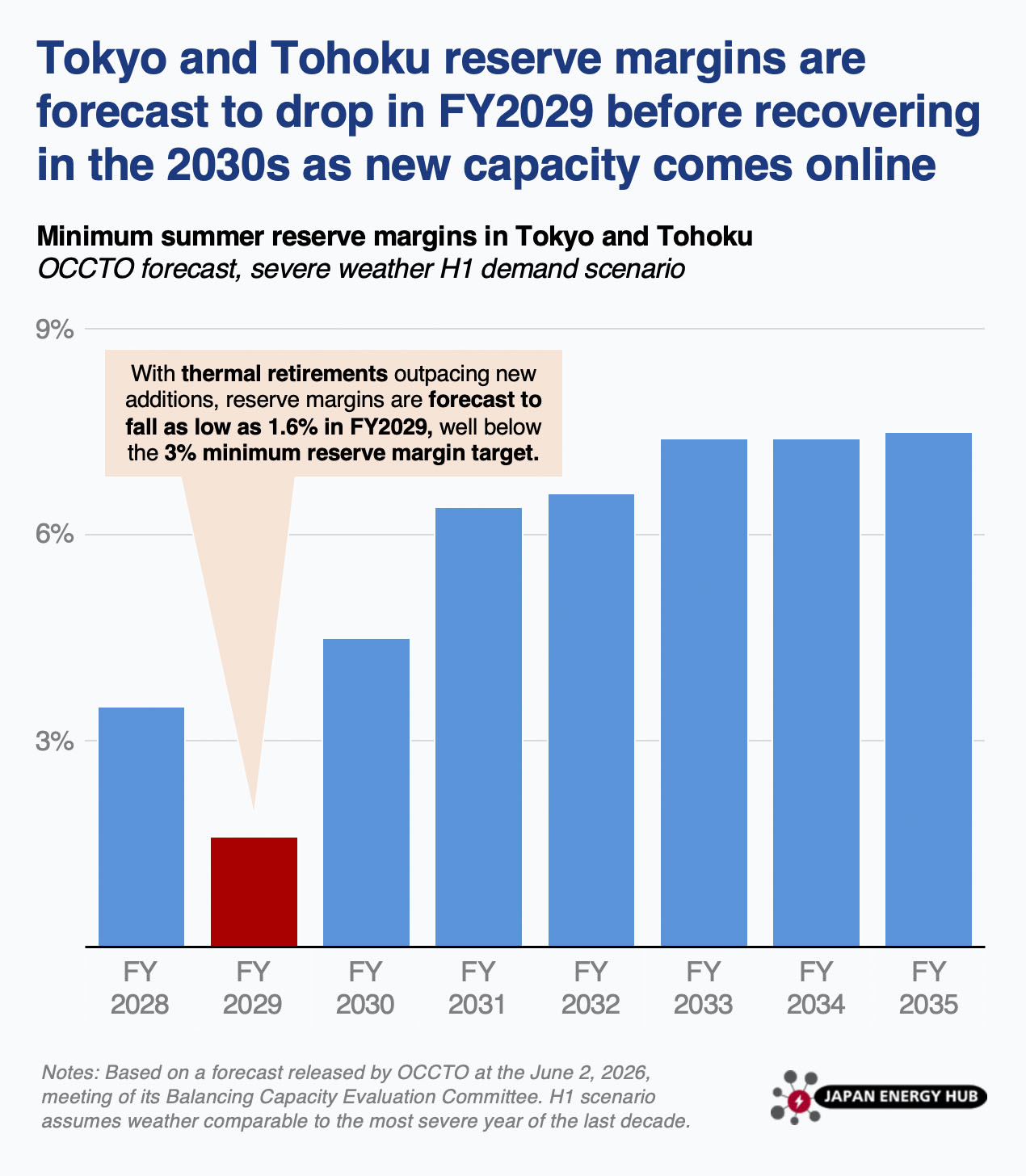
With thermal power plant phase-outs expected to accelerate in the coming years, OCCTO forecasts Tokyo and Tohoku reserve margins could fall as low as 1.6% in the summer of FY2029 under its most severe weather scenario. Conditions are expected to improve from FY2030 onward as new capacity, including LNG-fired plants awarded through long-term decarbonization auctions, enters service.
Start typing and press enter to search
Enehub Pro - Inquiry / Quote Request
Fill out the form below to inquire about an Enehub Pro subscription. If you would like to receive a quote, please let us know your planned number of users and any add-ons you are interested in.
We typically respond within one business day.
Enter your billing information below to receive payment instructions and proceed with buying the CPPAs in 2025: Market Overview, Trends, and Opportunities report.
Submit the form below to receive a sample issue of The Japan Power Industry Executive.