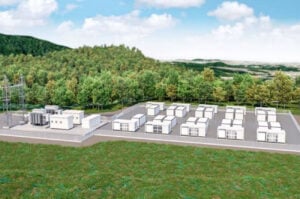
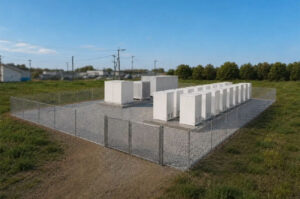
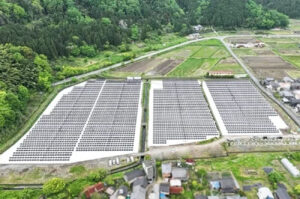
Daiwa Energy & Infrastructure-affiliated special purpose company (SPC) DEI Battery Fund Alpha LLC will scrap its 24.9MW/100.3MWh grid-scale battery storage project in Nishiki Town, Kumamoto Prefecture, TESS Holdings announced on August 14, 2026.
According to the statement, the project’s engineering, procurement, and construction (EPC) contractor TESS Engineering and the SPC plan to cancel their approximately 4 billion yen contract at the end of August 2026. The decision follows Kyushu Electric Power Transmission and Distribution’s technical review that indicated higher grid connection costs and a longer timeline than initial estimates suggested, making continued development unviable.
TESS Holdings said that none of the other projects it is developing or has been contracted to build are currently facing cancellation over connection cost increases or delays.
The Kumamoto project was the first developed under a March 2024 alliance between Daiwa Energy & Infrastructure, Gotion Japan, and CO2OS, which targeted deploying 1GWh of the Chinese manufacturer’s battery systems in Japan within two years. DEI Battery Fund Alpha acquired it in February 2025, and TESS Engineering received the EPC order in April 2025. Commissioning was scheduled for 2028.
TESS Holdings and Daiwa Energy & Infrastructure separately partnered on grid-scale storage in February 2025, aiming to commit to 2GWh of projects within three years. Under the tie-up, TESS Engineering also secured a 13 billion yen EPC contract with DEI Battery Fund Beta LLC in September 2025, scheduled for April 2028 completion.
Daiwa Energy & Infrastructure commissioned its first grid-scale battery storage facility, the 50MW/100MWh Shinkawa Power Storage Station in Sapporo City, Hokkaido, held jointly with Fuyo General Lease and Astmax, in November 2025. Additionally, it is building a 38MW/160MWh asset in Chitose City that is expected to come online in 2027.
The cancellation highlights some of the key challenges faced by developers of extra high-voltage battery storage projects, including connection costs that can significantly exceed initial estimates provided by grid operators and long wait times.