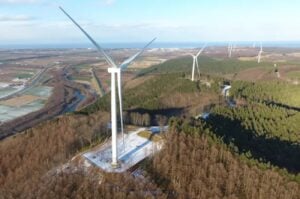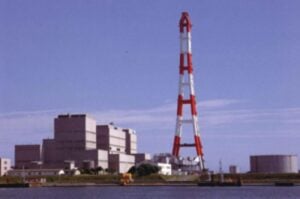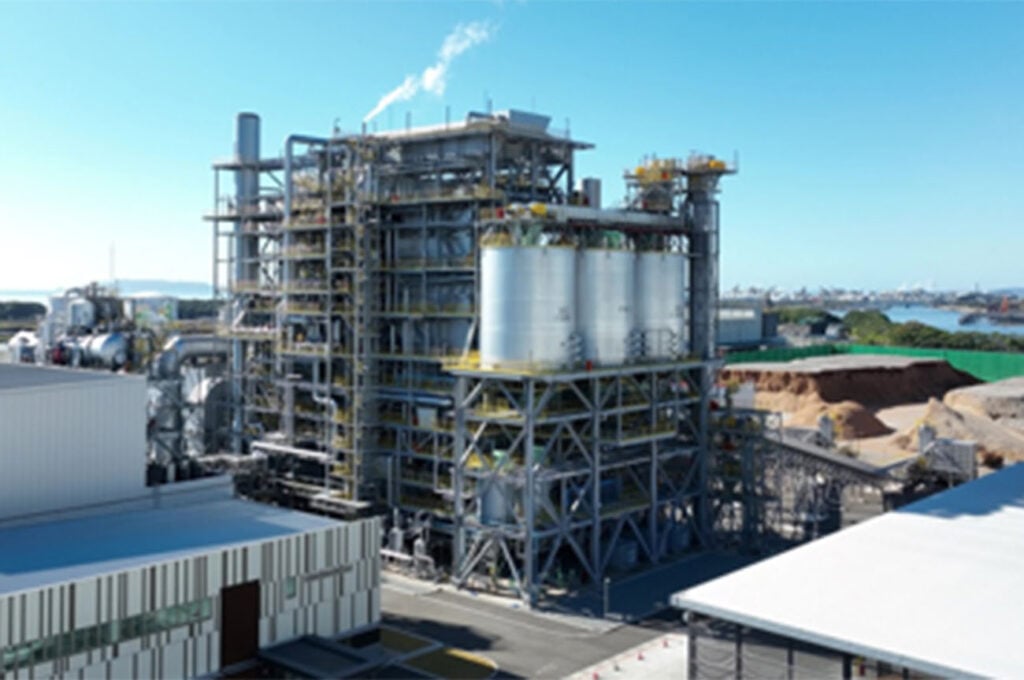
Osaka Gas will supply JR East with non-fossil certificates (NFCs) tied to the output of the 74.9MW Hirohata Biomass Power Plant in Himeji City, Hyogo Prefecture, from August 2026, the company announced on August 5, 2026. It did not disclose the scheme’s exact launch date.
According to the statement, the virtual PPA’s annual supply volume is expected to reach about 530GWh. Osaka Gas will buy the asset’s entire output, sell the power in the wholesale market and through other means, and deliver the NFCs to JR East. The deal was signed through Daigas Energy, its subsidiary that acts as an intermediary. The railway company expects the certificates to offset approximately 12% of its CO2 emissions.
Hirohata Biomass Power Plant was commissioned in December 2023 and is fueled with wood chips and palm kernel shells (PKS). METI data shows the project was certified under the feed-in-tariff (FIT) scheme in FY2016, when general wood biomass plants were eligible for 20-year, 24-yen-per-kWh contracts. Its procurement period runs through November 2043. To enable the PPA, the asset had to switch to feed-in-premium (FIP) operations.
The asset’s owner, Hirohata Biomass Power, is held 90% by Osaka Gas’ wholly-owned subsidiary Daigas Gas and Power Solution and 10% by Kyushu Electric Power’s renewables unit Kyuden Mirai Energy.
JR East previously disclosed two other biomass-backed virtual PPAs, including for the 50MW Wakayama Gobo, which is also partially owned by Osaka Gas, and for a 12.4MW asset owned by Hachinohe Biomass Electric Power. Japan Energy Hub’s PPA database shows the company has also signed several solar, wind, and hydro deals, primarily to power its railway network.