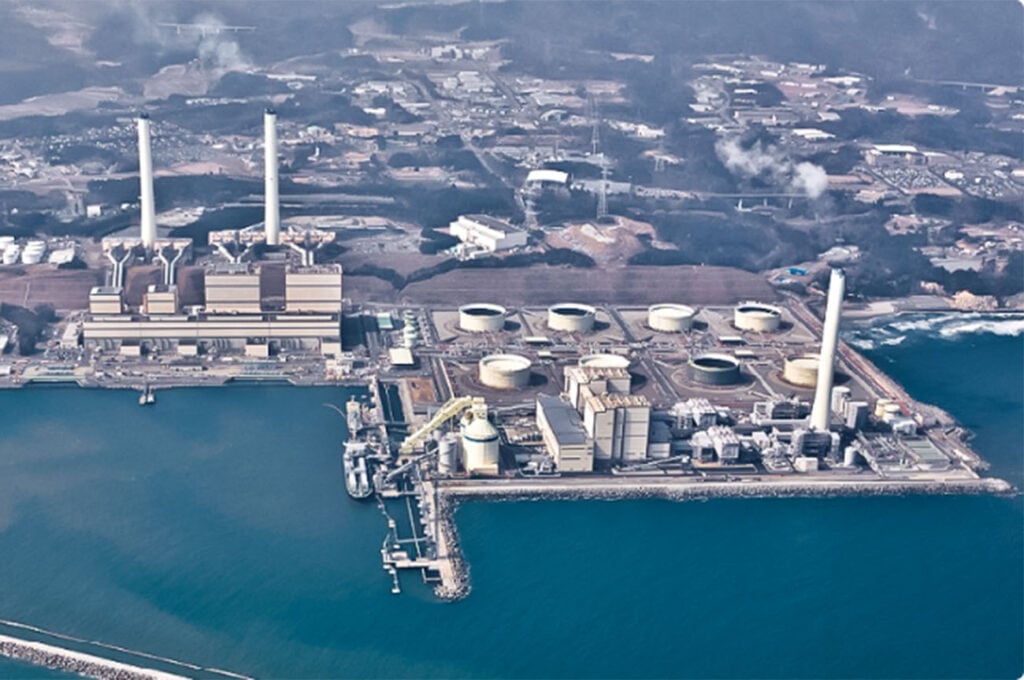
JERA will consider resuming sales of coal-fired power under long-term PPAs from as early as summer 2026, the company said at a regular press conference on June 24, 2026.
The company outlined plans to alternate between limiting coal-fired generation during normal periods to reduce emissions and increasing utilization during emergencies, such as the ongoing geopolitical tensions in the Middle East, to reduce exposure to volatile spot LNG procurement costs. It said long-term PPAs, rather than wholesale market sales, would be necessary for the resulting cost savings to reach consumers.
According to JERA’s estimate, annual nationwide generation costs could be reduced by approximately 3 trillion yen by actively utilizing coal-fired power alongside LNG-fired generation during periods of market disruption. The calculation assumes long-term LNG costs of 16 yen/kWh in normal periods and 25 yen/kWh during emergencies, spot LNG costs of 15 yen/kWh and 53 yen/kWh, respectively, and coal-fired generation costs of 7 yen/kWh and 17 yen/kWh.
The joint venture between TEPCO Fuel & Power and Chubu Electric Power operates six coal power plants totaling about 10GW that were formerly owned by the two utilities. The assets that were originally part of the former’s portfolio operated under long-term PPAs with TEPCO Energy Partner between FY2016 and FY2025.
Thermal power generation accounted for about 65% of Japan’s power supply in FY2025, ranging from 43% in the Kansai TSO area, which has the most active nuclear reactors in the country, to 92% in Tohoku. Coal-fired power plants contributed 27% of the total, covering between 24% in Tokyo and 85% in Shikoku.
METI lifted utilization restrictions on low-efficiency coal power plants with capacity market contracts for the duration of FY2026 in an effort to limit power price spikes caused by LNG supply disruptions.